
7 Advantages of 3D Scanning for Flange Inspection
In industrial facilities, flange connections are everywhere — piping systems, pressure vessels, heat exchangers, compressors, and rotating equipment all rely on properly sealed flange faces to operate safely and efficiently.
When a flange surface becomes damaged, warped, or uneven, the consequences can be costly. Potential risks include product leaks, unplanned downtime, repeat maintenance, safety risks, environmental incidents.
Traditionally, flange inspection has relied on straight edges, feeler gauges, dial indicators, or measurement probes and arms. While these methods can identify defects, they often lack the speed, accuracy, and detailed reporting required for today’s industrial maintenance standards.
This is where 3D scanning technology is changing the game.
Modern handheld laser scanners now allow maintenance teams and inspection providers to capture highly accurate digital models of flange surfaces in minutes. The result is faster inspections, better data, and more confident maintenance decisions.
What Is 3D Scanning?
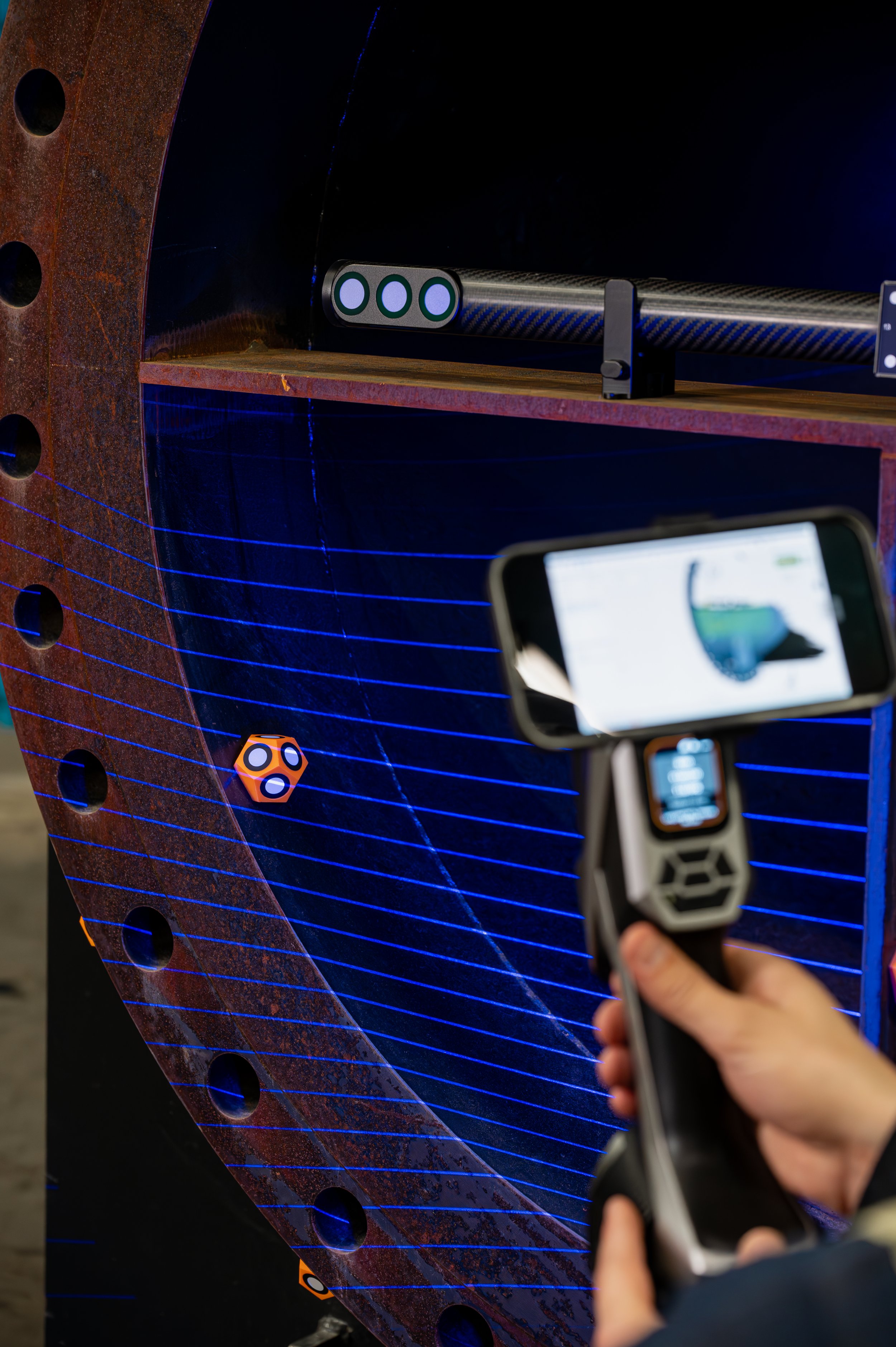
3D scanning uses portable laser scanners to capture the exact shape and geometry of a flange surface. The scanner projects laser lines onto the flange while cameras track the surface in real time. Specialized software then creates a detailed digital model that can be measured and analyzed.
This process allows technicians to inspect:
Flatness
Surface distortion
Face damage
Flange thickness
Bolt hole position
Surface condition
Instead of relying on a few manual measurements, teams get a complete digital representation of the flange.
Key Advantages of 3D Scanning Flanges
1. Faster Inspection Times
One of the biggest advantages of 3D scanning is speed. Traditional flange inspections can require multiple setup steps and set up of heavy and complex equipment, as well as manual measurements, repeat checks, and time-consuming manual documentation.
With a handheld scanner, the entire flange surface can often be captured in just a few minutes. For turnaround and shutdown work, this can significantly reduce inspection time and help critical equipment return to service faster.
3D Scanning of flanges can reduced outage duration, lead to faster decision-making and overall increased productivity in the field.
2. Extremely High Accuracy
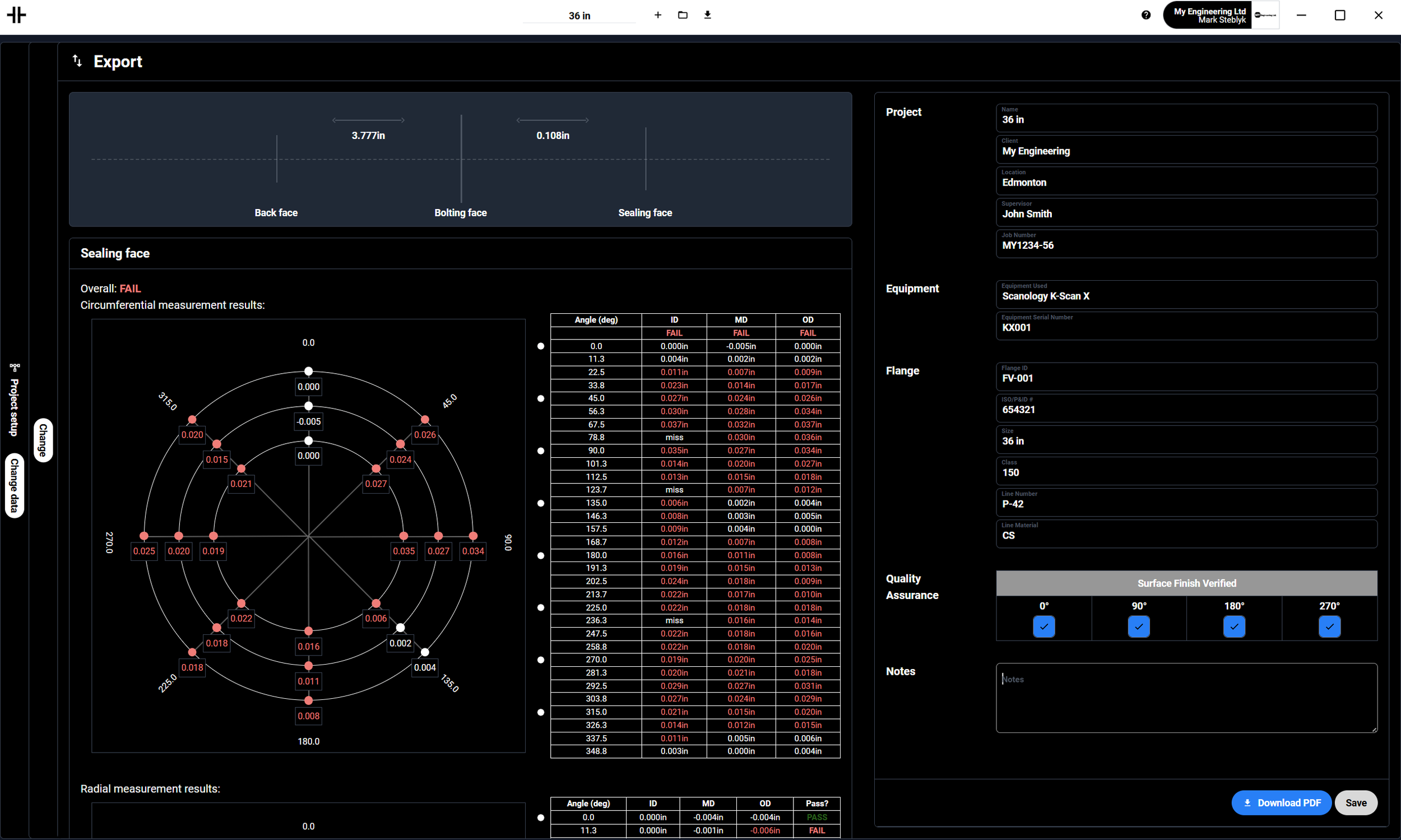
Modern industrial scanners can achieve accuracy within a few thousandths of an inch across large flange surfaces. This level of precision allows inspectors to identify small warping issues, surface irregularities, localized damage and areas outside of tolerance.
Manual methods may miss these smaller defects, especially on larger diameter flanges.
Accurate data helps ensure proper gasket sealing, better equipment reliability and reduced risk of leaks.
3. Complete Surface Coverage
Traditional inspection tools only measure selected points on a flange face.
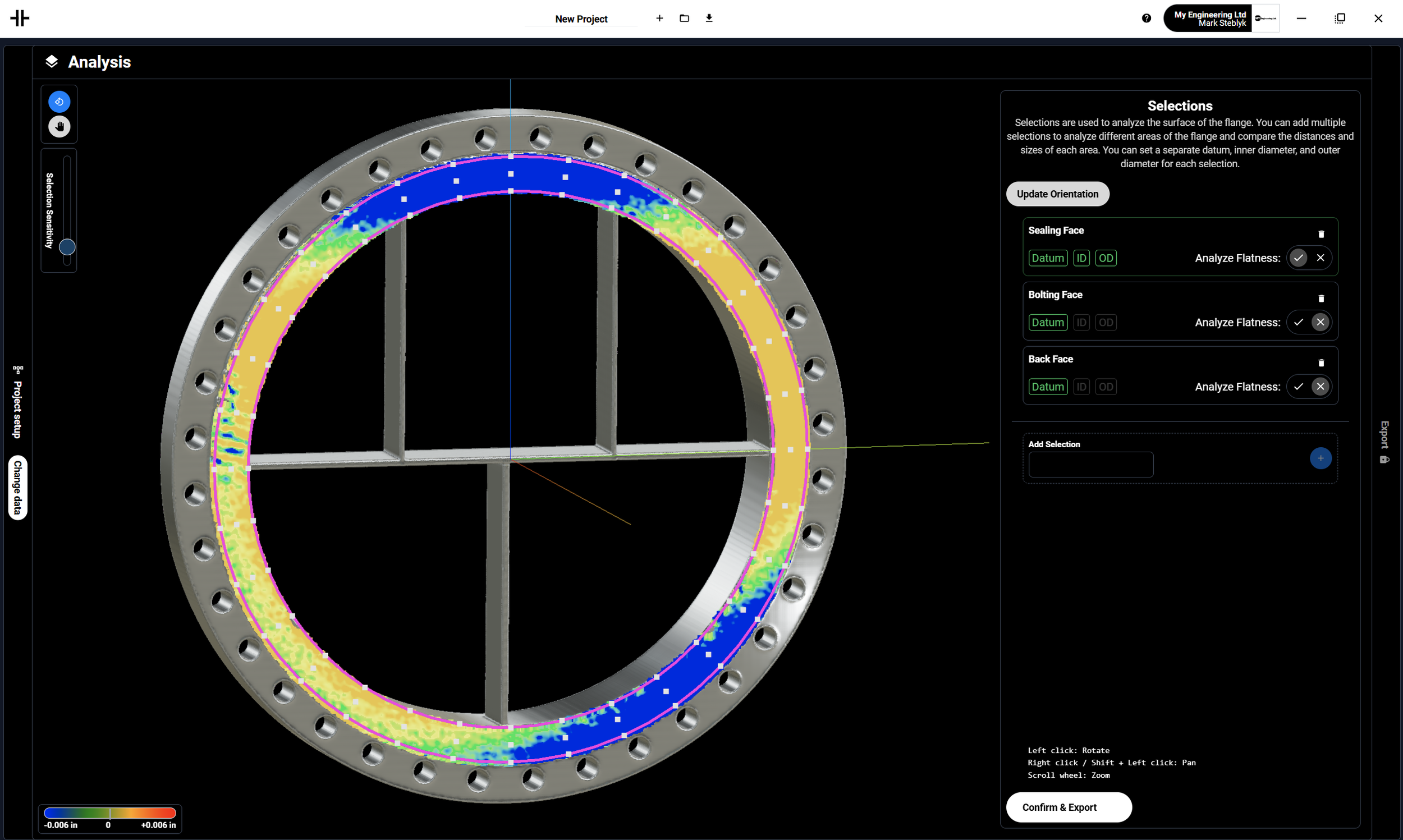
3D scanning captures the entire surface.
This means inspectors can analyze:
High and Low spots
Uneven wear patterns
Full face flatness and thickness
Damage distribution
Instead of estimating conditions between measurement points, teams have a full digital model to review. This provides a much clearer understanding of actual flange condition.
4. Improved Documentation and Reporting
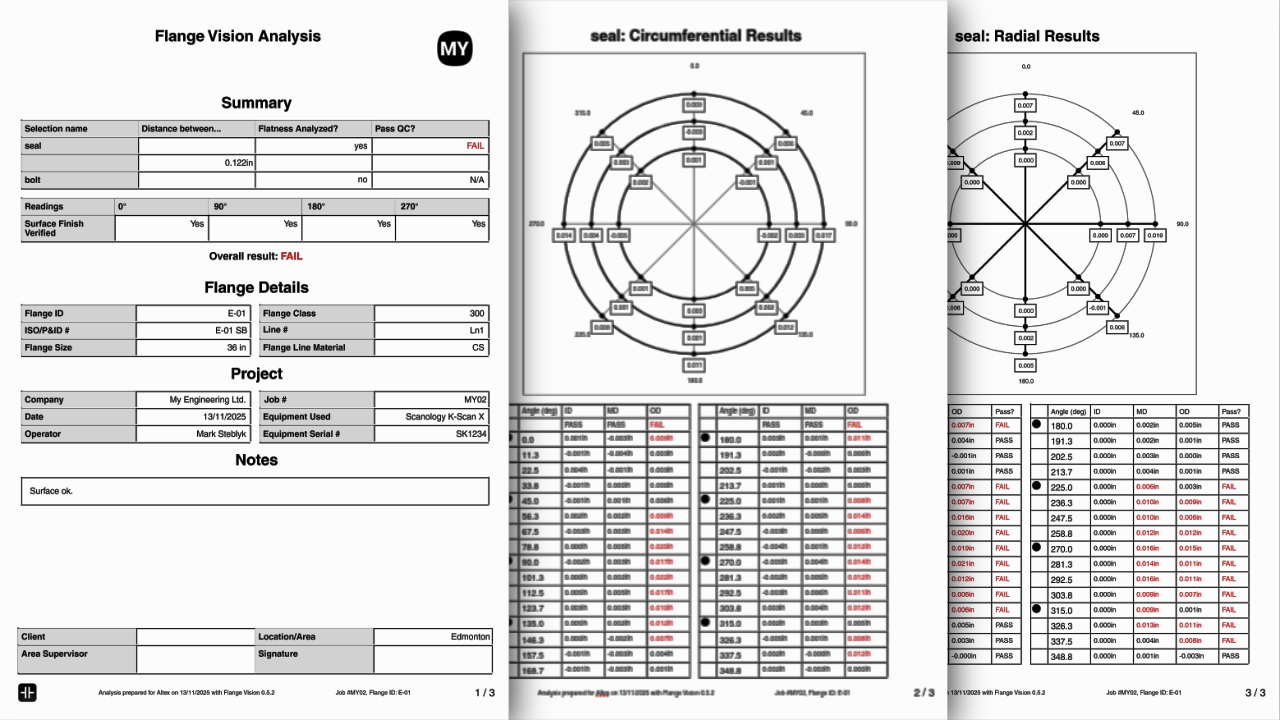
Industrial maintenance increasingly requires detailed inspection records for quality assurance, regulatory compliance, customer reporting and asset management.
3D scanning creates digital inspection records that can include:
Flatness analysis
Measurement reports
Color deviation maps
Historical comparisons
These reports are easier to understand and provide stronger evidence than handwritten field notes or manual measurements. For service providers, professional reporting also adds value for customers.
5. Improved Maintenance Planning
Because 3D scans provide highly detailed data, maintenance teams can make better repair decisions. The scan(s) may show whether machining is required, if a flange can remain in service, how severe the damage is and whether replacement is necessary.
This helps reduce unnecessary repairs while preventing equipment from returning to service with undiscovered issues. Over time, scanned data can also help identify recurring failure patterns and allow maintenance teams to better predict and plan for replacement of worn equipment.
6. Safer Inspections
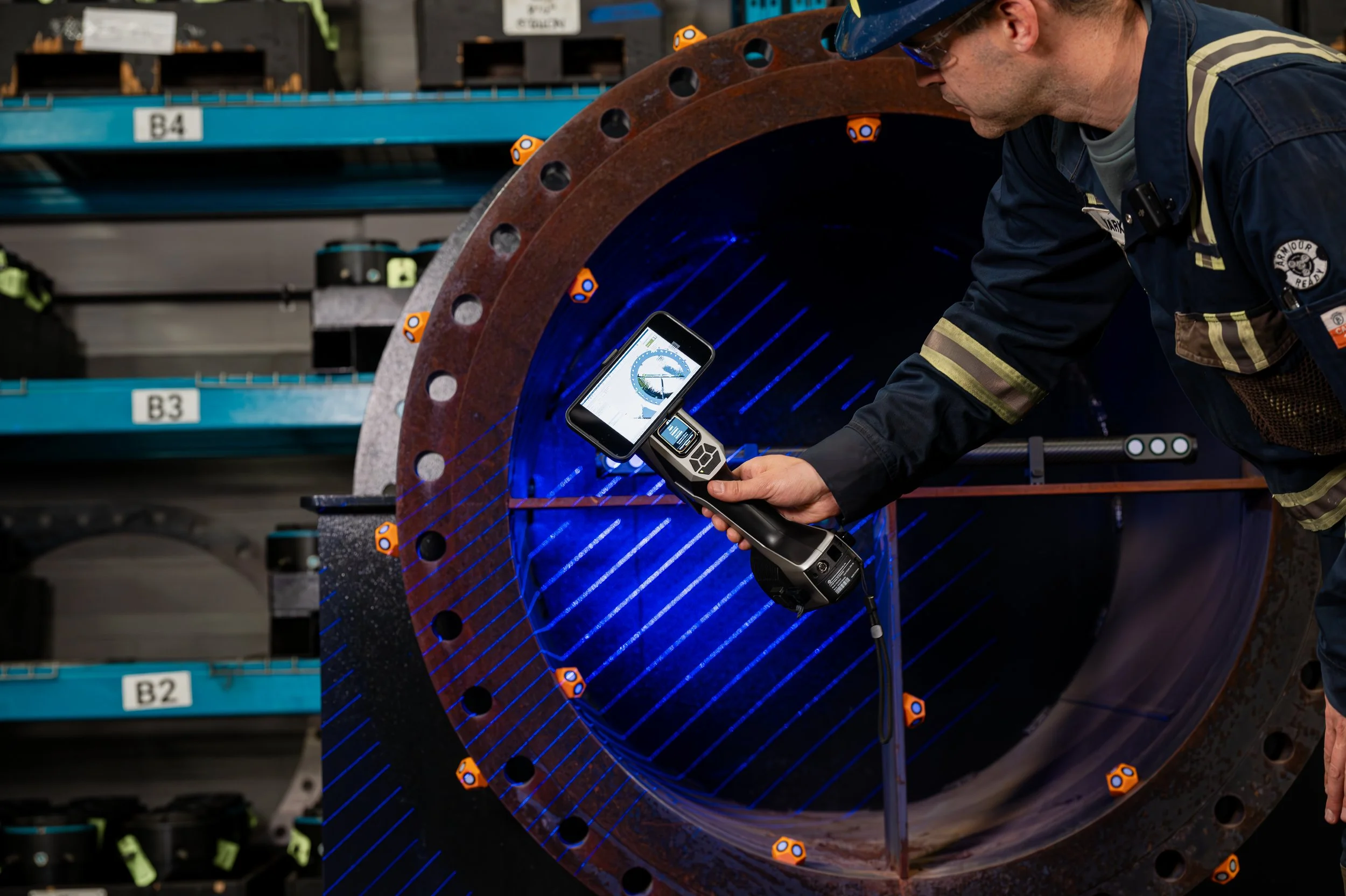
Many industrial inspections occur in difficult environments such as elevated piping systems, tight and congested spaces, hot work areas and time sensitive shutdown conditions.
3D scanning minimizes the amount of physical contact, man power and worker exposure required to inspect the equipment. This can have a profound impact to overall safety operations by reducing hazards and risk to personnel safety.
7. Digital Records for Future Comparison
A major advantage of 3D scanning is the ability to store inspection data permanently. This allows facilities to compare flange condition over time. Future scans can be compared against original manufacturing geometry, previous repairs and historical inspection records.
As previously mentioned, this also supports predictive maintenance strategies and long-term asset reliability programs.
The Future of Industrial Inspection
As industrial facilities continue adopting digital maintenance technologies, 3D scanning is becoming an increasingly important inspection tool. The combination of speed, accuracy and digital reporting makes 3D scanning a major improvement over traditional inspection methods.
Flange integrity is critical to safe and efficient plant operation. Small surface issues can quickly turn into major reliability problems if left undetected. For maintenance professionals, inspectors, and industrial service providers, the technology offers a practical way to improve reliability, reduce downtime, and deliver better inspection results. As the industry moves toward more data-driven maintenance practices, 3D scanning is quickly becoming a valuable tool in the modern inspection toolbox.