
Choosing a 3D Scanner for Flange Inspection with FlangeVision
Choosing the right 3D scanner for flange inspection sounds simple at first. Just pick a scanner, take a measurement, and get your results—right? Not quite. In reality, it can be more complicated.
Flanges play a big role in keeping industrial systems safe and leak-free. When something goes wrong, the cost can be high—lost production, downtime, and even environmental issues . Because of this, measuring flange flatness accurately is very important. But getting those measurements is not always easy.
Today, companies are turning to 3D scanning and tools like FlangeVision to improve how they inspect flanges. These tools can capture the full shape of a flange and help teams understand its condition faster than traditional manual methods. However, not all 3D scanners are the same—and choosing the wrong one can lead to inaccurate results which may not meet the desired tolerance, leading to further wasted time and frustration.
In this article, we’ll explore the key considerations in selecting the right 3D scanner for flange flatness measurement—and what to look for to choose the best scanner for your needs.
Key Considerations When Selecting a Scanner for Measuring Flanges
Accuracy
This is how close the scan is to the real shape of the flange. For flange flatness, you need to meet very tight tolerances, ; sub-millimeter or better,especially if you are required to meet ASME PCC-1 specification. when reviewing scanner specifications, it is important to consider not only general accuracy, but also volumetric accuracy.
Resolution
Resolution is how much detail the scanner can capture. Higher resolution helps detect small surface variations, like flange warping and damage.
Size Range and Flexibility
Flanges come in many sizes. Ideally, your scanner should handle a range of flange sizes to ensure you are not limited. Some scanners lose accuracy over larger areas, referred to as “drift”, which is indicated by the Volumetric accuracy.
Speed and Efficiency
Some scanners are very accurate but slow. Others are fast but less precise. For field work, you want a scanner that Captures data quickly, and minimizes overall scanning time.
3D Scanners for Measuring Flange Flatness
Choosing the right scanner is a key step in ensuring accurate measurements and confident decision-making. The following list of 3D scanners are recomended for use with FlangeVision.
Scanology KScan-X
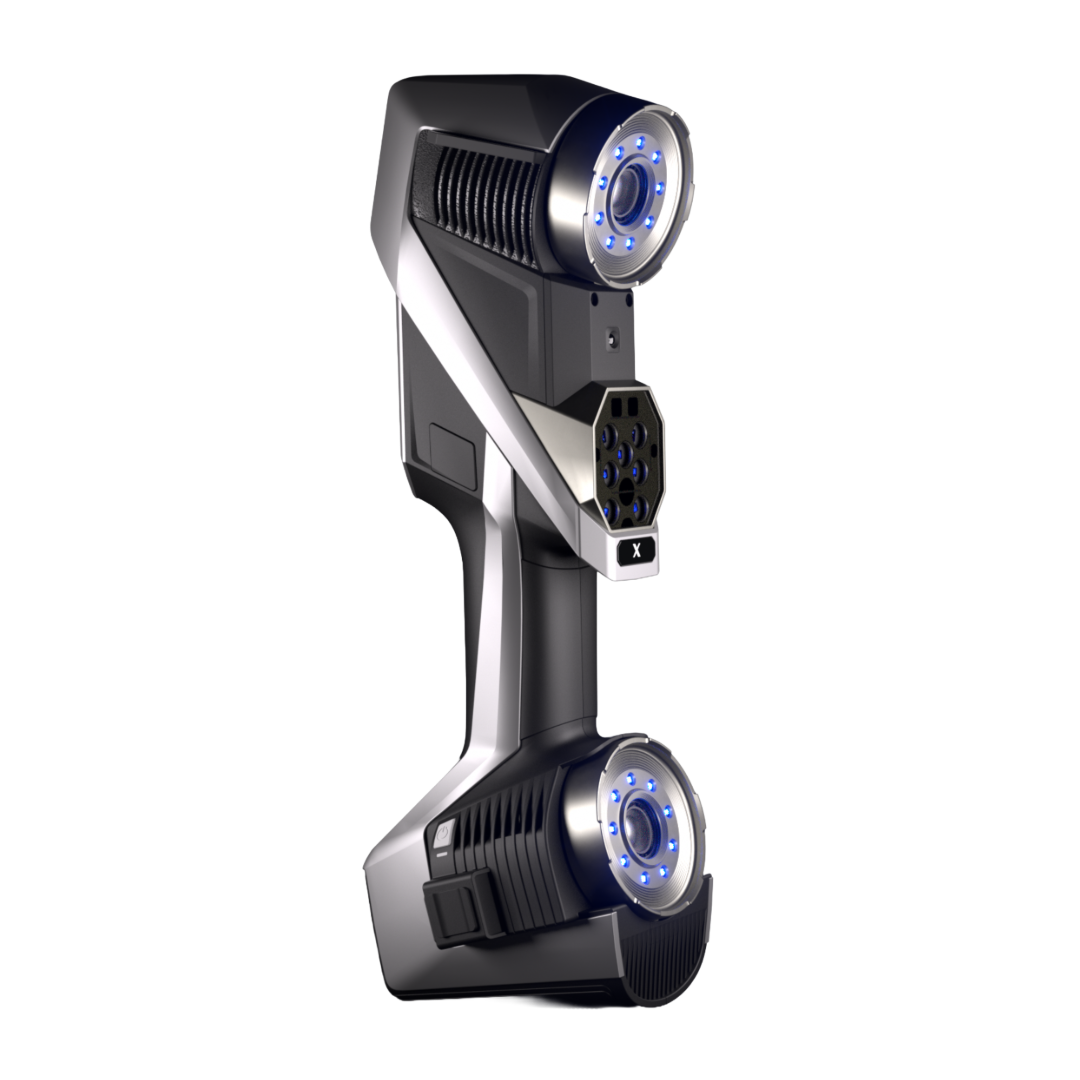
The Scanology KSCAN-X 3D scanner is designed to make high-quality measurements easier, faster and with greater flexibility with its wireless capability.
The KScan-X can measure with accuracy up to 0.030 mm for detailed scans and up to 0.075 mm for larger areas/ objects, while capturing surface details down to 0.1 mm resolution. In simple terms, this means it can detect very small changes in a flange surface—exactly what you need when checking flatness.
Another major advantage of the KSCAN-X is its size range and flexibility. With the included scale bars, the KScan-X can measure large flanges while minimizing accuracy drift, making it very well suited for flange flatness measurement of flanges of all sizes.
The KSCAN-X stands out for its speed and efficiency. It can capture up to 6.45 million measurements per second and operate at high frame rates, allowing large surfaces to be scanned quickly.
Finally, the fully wireless design also makes it easy to use in the field, without cables getting in the way. This combination of speed and ease of use means inspections that once took hours can now be completed much faster. When used with FlangeVision, this allows teams to quickly scan, analyze, and make decisions about flange flatness—helping reduce downtime and improve overall reliability.
*The KScan-X scanner has been tested and validated by our team for optmial performance and accuracy for flange inspection.
The following scanners specifications meet the accuracy and performance criteria required for flange inspection, however these scanners have not been tested and validated by our team, and we cannot guarantee the results will adequately meet inspection requirements.
Creaform HandySCAN BLACK Series
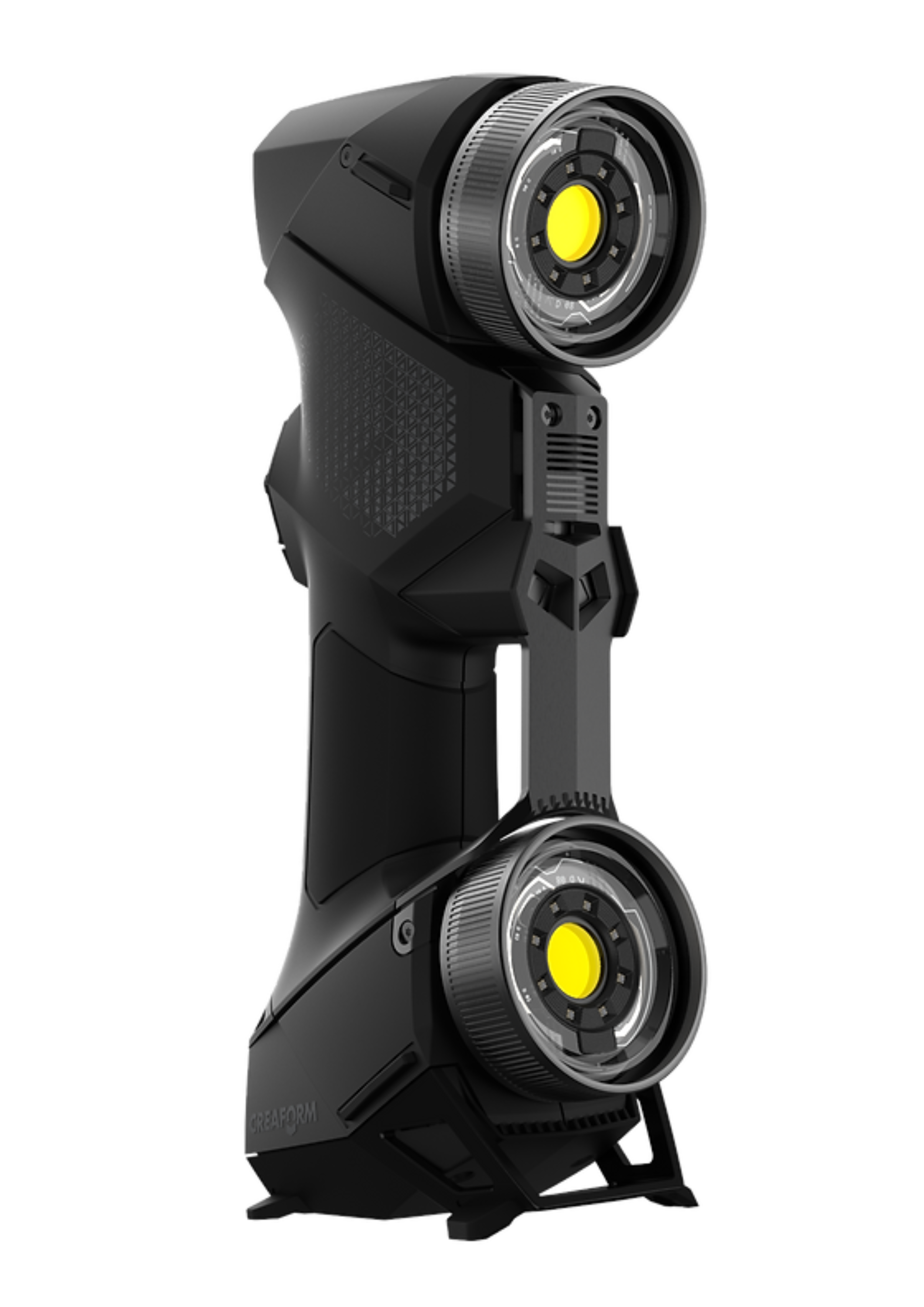
The Creaform HandySCAN Black Series scanners are designed to deliver highly accurate measurements in a simple, portable package, making it a strong choice for flange flatness inspection. it offers accuracy of up to 0.025 mm, which means it can capture very small changes on a flange surface, and can also detect fine details, such as small steps or surface variations, which is important when checking flatness.
The Black Elite also stands out for its size range and flexibility. It can scan parts from about 0.05 m up to 4 m in size, with a working distance between 200 mm and 450 mm.
The HandySCAN’s handheld design makes it easy to move around the flange, even in tight or hard-to-reach areas. This flexibility is important in real plant environments, where flanges can vary in size and are often not easy to access.
In terms of scanning speed, the HandySCAN Black Elite is built to make inspections faster and easier. Scanning at a speed of 1.8 million measurements/second, and resolution of up to 0.025 mm, it uses multiple blue laser lines to quickly capture large areas while still maintaining high quality data.
Hexagon Atlascan Pro
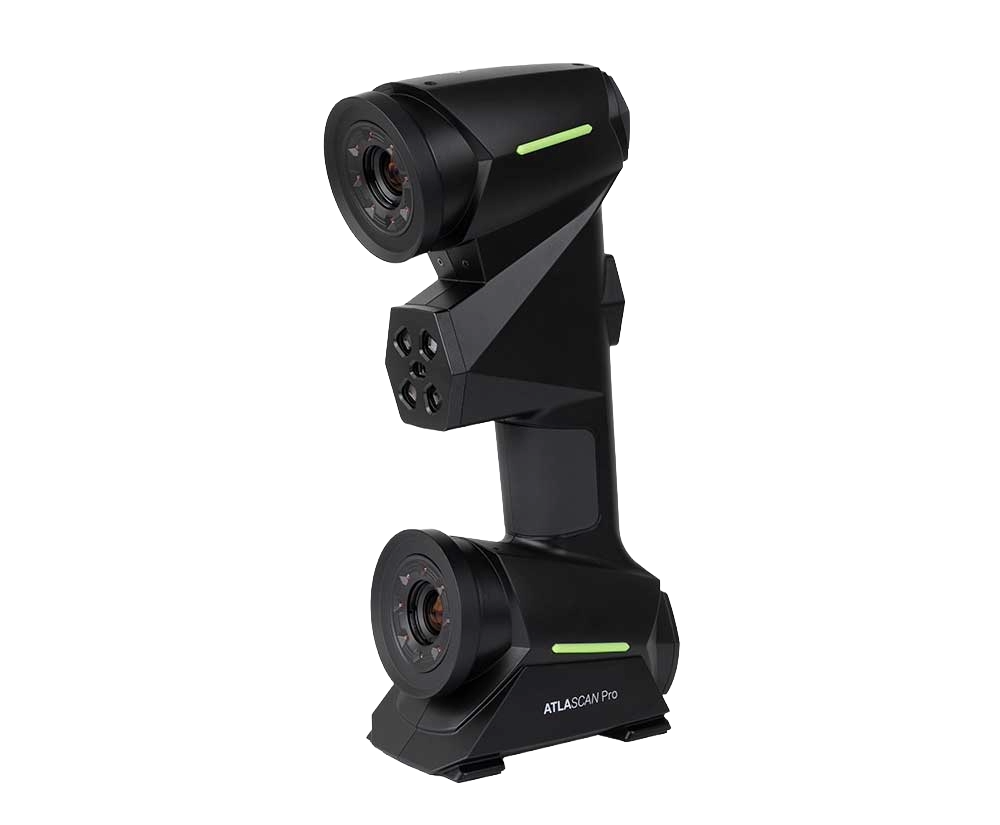
The Hexagon ATLASCAN Pro is a handheld 3D scanner designed to balance accuracy, speed, and ease of use, making it a practical option for flange flatness inspection. With accuracy up to 0.03 mm and resolution down to 0.01 mm, it can capture very small surface changes on a flange.
One of the key strengths of the ATLASCAN Pro is its size range and flexibility. It can handle parts from about 0.1 m up to 4 m in size, and scan areas as large as 720 × 640 mm in a single pass. It also offers multiple scanning modes—standard, fine, and single line—so users can switch between faster scanning or higher detail depending on the job. This makes it well suited for flange work, where sizes and conditions can vary. Whether scanning a small pipe flange or a larger vessel connection, the scanner can adapt and capture the full geometry needed for proper analysis.
The ATLASCAN Pro is built to keep inspections moving quickly. It can capture up to 4 million points per second and uses high frame rate scanning and offers an optional wireless scanning module to provide additional freedom of movement when scanning.
Conclusion
In the end, choosing the right 3D scanner for use with FlangeVision comes down to finding the right balance. You need a scanner that is accurate enough to detect small surface changes, has high resolution to capture fine details, is fast enough to keep inspections moving, and can handle a wide range of flange sizes in real-world conditions. The scanners we’ve discussed all offer strong performance in these areas, making them well suited for flange flatness measurement. By focusing on these key factors, you can select a scanner that not only delivers reliable results, but also helps your team work faster and make better decisions in the field.